1950s fashion, sewing, sewing patterns

Fashionable Friday: McCall’s 9706

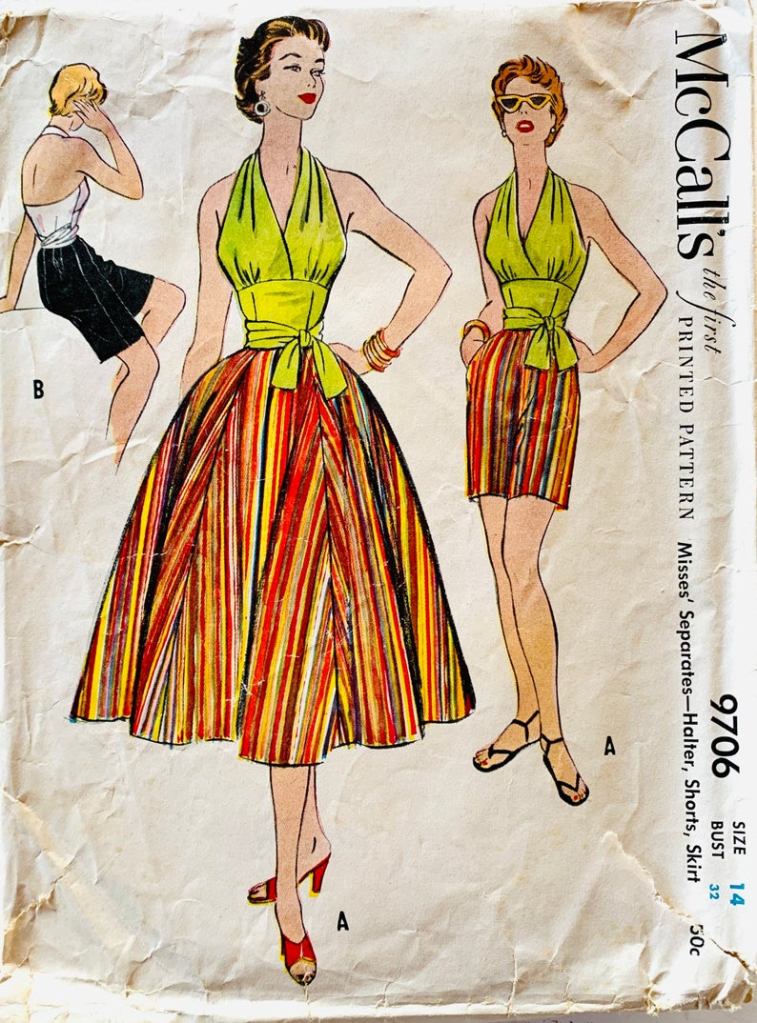
McCall’s 9706, 1954

When you reach into your stash, looking for something to list, and randomly pull out this. Wow. That top is amazing. I sell a repro pattern similar to this in the shop, but this one includes the shorts and skirt too? It’s almost too much to handle that early in the morning. That lime green is pretty eye catching too, and although as a fair redhead, I couldn’t handle that color, it’s perfect for almost everyone else.

They really overdid themselves with this pattern illustration, yes? Now available in the shop.

Uncategorized

Spadea – Doing Things the Right Way

Spadea Catalog #28, available now in the shop.

If you’ve never seen a vintage Spadea pattern, then you have missed out on a treat. Spadea patterns are fabulous. I came across a 1965 article about them recently and learned more about the company.

I already knew some things from reading this blog post years ago by Lizzie, of The Vintage Traveller. She was fortunate enough to correspond with and interview the Spadea’s daughter, who acted as a fit model for them. It truly was a family owned business. According to the article I read, the Spadeas had over 80 international designers under contract. They travelled the fashion shows, looking for garments they wanted to replicate into their designer pattern lines. Once they had a sketch, they draped a muslin on a size 12 dress form until they got the line-by-line duplicate they needed. If it wasn’t exact, they couldn’t put the designers name on it. Once the draping was done and it all matched the original, the pattern makers went to work making the pattern pieces,grading it to other sizes, writing the instructions and figuring out the cutting chart. This was all done by hand and then checked for accuracy by a second person.

The really mind blowing thing is how the pattern pieces were cut. Unlike other pattern companies, Spadea cut their pieces by hand. They laid the brown paper pieces on top of 100 tissue paper pieces, then cut it all by hand with a knife. The perforations were marked by hand, or sometimes with a hand operated machine, and then they were sent by folding. Folding was also done by hand. Considering the thousands of patterns they sold over the years, this is really fascinating to me. I would love to see the particular knife they used to cut with. Was it more of an X-acto knife like my dad used for crafts, or more of a box cutter shape? (I’m a little caught up in the idea of knives right now, because I bought hubby some Wusthof knives for Christmas, and am sure we will end up in the ER, given his propensity for kitchen accidents, but I digress.) But cutting 100 pieces at a time with a knife is really something of awe. It’s a far cry from this 2016 video – a VERY quick view at how a McCall’s pattern piece is cut and folded by machine.

Mr Spadea stood by his process, however, stating that in the fifteen years his company had been in business, they had had fewer than five times that they had had to admit that they made a mistake, and refunded a sewist for a ruined project. His employees said that mistakes were because “women just don’t read the instructions.” I’d take his advice, even though I’m a beginner and pore over the instructions anyway. Given the fact that Spadea patterns are for designer garments, paying special attention to the instructions is a must, in order to end up with the high quality fashion you are looking for.

I may receive a small stipend from purchases made from my links. I only post links to things I love and think that you will enjoy.

sewing, sewing patterns

The Past 12 Months, in the Form of a Sewing Pattern

Simplicity 8890

Am I wrong? Buy it here.

1950s fashion, designers, sewing patterns

Susie Stephens – Midwest Goodness

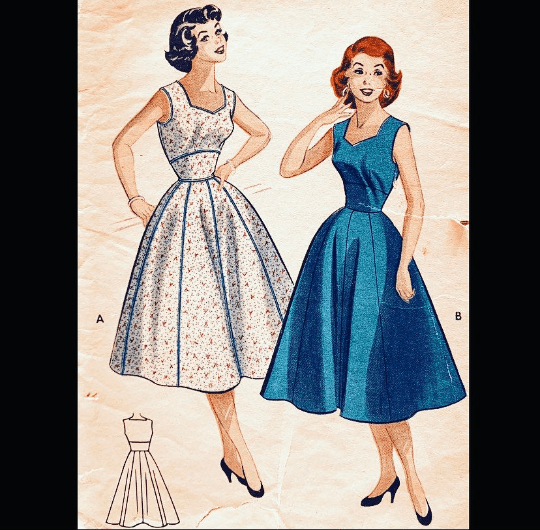
Butterick 6879.

I listed this cute pattern in the shop this morning. It’s Butterick 6879 and it’s adorable. I love View A, but can’t imagine doing all that bias tape trim. It’d be worth the work, but wow. This pattern is part of the “Susie Stephens” line from Butterick.

Susie Stephens, in case you didn’t know, is a line of sewing patterns designed by students at Stephens College, in Columbia, Missouri. (Fun fact: I grew up not far from there, and always thought of it as a rich kids school. But I digress.) At Stephens, they had a yearly fashion show done by the students. It was called “Susie Stephens.” It commonly had a theme, such as in 1952, where the them was “Campus Classics from the Classics,” and featured garments and millinery inspired by books such as Little Women, David Copperfield and Wuthering Heights. These garments were shown in fashion shows around the Midwest.

A 1947 article notes that the designs were fresh and adaptable, with rompers that had skirts to go over them, coats with enough volume to carry books underneath during the rainy season, and much more. On the day of the show, it was surmised that the garment district of St Louis must’ve emptied out and headed to Columbia, along with designer staff from Kansas City and New York. Budding designers were hired straight from these shows. The next day, the show was done again for the people of Columbia, where customers could choose the garment or the patterns, to take to their dressmaker for adaptations.

By 1950, Butterick had taken notice, and started their “Susie Stephens” line. This line was specifically created from the Stephens College students’ designs, and was advertised for teenagers. By 1952, they had printed 30 designs in the Susie Stephens line, but it seems to have waned in popularity after 1953, and disappeared completely after 1954. It’s worth taking a look at this cute line of patterns.

1950s fashion, designers, sewing patterns, vintage clothing, vintage fashion

Thank Your Lucky Stars for Claire

I saw this meme over the holidays and had to laugh. It’s said that it’s a white-girl thing that every time someone admires a dress, the girl responds in kind “thanks, it’s got pockets.” Now I don’t know that it’s purely a white-girl thing, but women do love themselves a good garment with pockets. And do you know who you can thank for that?

Claire McCardell.

Ms. McCardell was known as the one who invented American sportswear, and for good reason. She was tall and athletic herself, the only sister in a family with three boys, and she wanted comfortable clothes she could move in. She ended up as a founding board member of Sports Illustrated. I doubt that a fashion designer has ever had that privilege since. She really did push sportswear to a whole new level (and I’m not talking about polyester gym suits and tennis dresses here).

Claire McCardell liked simple clothes that you could move in, in fabrics like jersey that draped well and moved with you. She loved cottons too, especially in plaids. Indeed, she made plaid ok to wear for evening wear. She pushed the notion of wearing tights and flats on the streets, instead of spike heels. She made jumpsuits and their shorter version, the playsuit, ok to wear outside of the Rosie the Riveter factory jobs. She put details on clothing that hadn’t been seen before or were seen only on jeans, like topstitching and yes, pockets. Those pockets that we love so much now.

Claire McCardell made it ok to wear separates, like shorts and blouses, capris, and the like. I’ve had two Claire McCardell patterns over the years: a Spadea (that sold for over $200 at auction) and a rarely found McCall’s pattern that probably sold for much less than it should have (I can’t remember). The Spadea was for one of her iconic dresses. The McCall’s was for sportswear separates. They aren’t easy to find, but the two patterns showed the full spectrum of what McCardell did.

I’m pretty sure that this Spadea 1130 is the one I had (it’s been a while). Simple lines and pockets.

Spadea American Designer’s #1130, 1953.

Here’s the McCall’s one I had. It’s a great representation of her love for sportswear separates and sadly, is from 1958, the year Claire McCardell died a very untimely death from cancer.

McCall’s 4494, 1958. Photo compliments of the Vintage Pattern Wiki.

If you are interested in Claire McCardell’s philosophy of dress, take a look at What Shall I Wear? , a book she authored that includes all kinds of advice on how to dress. I have a copy, and I love it. If you want to see more of her designs, grab Claire McCardell Redefining Modernism. It’s a coffee table book that has all the history of her designs, along with beautiful full color photos. Set aside some time for this one. You’ll want to give it its due, because it really is a wonderful book.

Until next time,
Lisa

Some links may be affiliate links where I may get a small stipend if you make a purchase.

Uncategorized

How Much Much Fun is This?

I came across this through a rather circuitous route, but wanted to share it.

Uncategorized

The Marion Nixon Dress

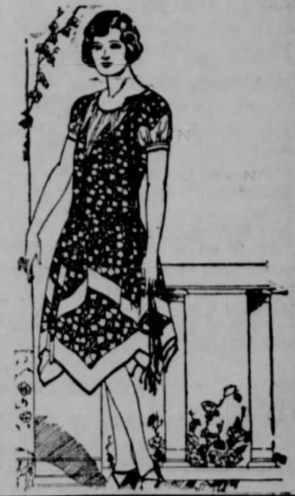
Pictorial Review 4232, from 1928

If you’ve read previous posts, you know I have a particular love for Pictorial Review patterns, because of their connection with my grandmother, so when I saw this dress, it made me smile. It’s Pictorial Review 4232, from 1928, which was shortly after my grandmother had my dad. She likely had only recently left Pictorial Review, so again, this may be a pattern she had a hand in choosing. Oh, my heart.

In researching this pattern, I found that it was advertised as “The Marion Nixon Dress,” because it was designed specifically for the actress of that name. She worked at Universal Pictures, and was quite beautiful. Gorgeous, in fact.

Marion Nixon

Ms. Nixon had quite the career, mostly playing wholesome roles. She was one of the minority of actresses who was able to successfully transform from silent movies to talkies. She retired from acting at the age of 32. She died in Cedars-Sinai Hospital on February 13, 1983, from complications following open heart surgery. Her age went unreported at the time, as different references gave different ages, and she always referred to herself as being 31-plus.

I find it particularly interesting that she had a dress named for her in 1928, because this means that Pictorial Review was doing what Hollywood Pattern Company would do later: associating patterns with a movie star. And for good reason, because Ms. Nixon was not only a popular actress, but also was president of the Beauty Arts Institute, which did merchandising of beauty products nationwide, and who set the standards for beauty professions of the time. Talented and smart — the greatest combination. Add her beauty and it displays a picture of a woman who I’d love to have a long dinner conversation with.

vintage clothing, vintage fashion

College Wardrobe – 1913

I found an article in an old McCall’s Magazine from 1913, listing what a girl should take to college. Interesting, especially given the fact that not that many women went to college, and most of the time, I think their parents did it so the young woman could find herself a husband. But if you’re interested in what Edwardian co-eds packed, here goes.

A medium weight suit that won’t be worn often. Hat and gloves to match, as well as a dressy silk or chiffon waist and half doze whit waists of tailored or lingerie styles. Note that all of these waists, hat and gloves are to go with a suit that they say will be worn only to church or afternoon teas, or for trips into town. The suit would be worn more often if you were in school in a large city.

Plain dresses for wearing to class. Because buildings were better heated than homes, and were close together, gingham and linen was worn later into the fall and earlier in the spring than at home.

“Nine out of ten Freshman” wear one piece or blouses dresses of dark serge or flannel in the winter. They may be embellished with rosettes or ribbon ties. These dresses were worn with cardigans or lightweight coats in spring and fall, with a heavier coat for the winter.

It was not acceptable to wear middy (sailor) blouses or jumpers (sweaters) outside a skirt unless you were on an outing or at an athletic event. They reported that one unnamed student association made a dress code saying a blouse could not be worn outside at chapel, recitations or at the table.

Hats were only worn for dress occasions (with the aforementioned suit), but a simple felt hat was worn in the winter or for walks off campus. They suggested a crochets cap was also welcomed for cold and stormy weather.

Later in the day, style of dress “depends upon the size of your — or your father’s — purse.” Dressing for dinner was the norm, to change out of the dress you’d already worn all day. This was wear the suit-skirt came into play, or gowns from last summer, in light colors in silk, cotton and wool. It was also acceptable to wear white pique or linen skirts with lingerie waists. Just don’t wear your day dress!

Dinner wear or elaborate evening gowns for concerts and other more formal evening events were worn with an evening coat or cap. It is suggested that it should be durable in fabric and color, because it would be worn to everything “from fudge parties to committee meetings.”

One should also pack two or three wash dresses, a couple of simple afternoon dresses — one thin and one thick, and a boudoir cap. Pack a washable kimono for slipping on at the last minute, as well as another for dress up occasions. Kimonos were the rule for hanging out in the dorm, and silk crepe was the best fabric to make one in.

Underwear should be sturdy underwear that can stand up to college washerwomen, in enough quantity so as not to run out if the laundry runs a week behind. A nightgown of better quality, for when the girls drop in — no sleeping in a T shirt in 1913.

Extras: a gym suit and shoes, another kimono for washing, a warm bathrobe, bedroom slippers, a soap box to carry to the tub, percale or seersucker petticoats, high boots, low shoes and pumps, rain boots, umbrella, raincoat and a hot water bottle.

They also remind the reader to start a memory book as soon as they arrive at school, by keeping ticket stubs, programs, invitations, postcards and the like, and to remind family to keep their letters. They suggest making the book from manila paper and brown linen cover, or buy one in the college bookstore. I still have my grandfather’s memory book from his time at West Point. It is one of my most cherished items.

So now you are ready for college. Get packing!

1950s fashion, designers, sewing, sewing patterns, vintage clothing, vintage fashion

Start the New Year With Something Pretty

Vogue 1434, Nina Ricci, 1959.

I was listing this gorgeous pattern on the website today and went searching for Nina Ricci online. I came across this equally beautiful photo of a dress from her 1961 collection and had to share it, because we all need to go into the new year thinking pretty thoughts. Print available here.

Nina Ricci, 1961.

Happy New Year to you all. May your year be full of light and joy and beautiful things.

sewing, sewing patterns, vintage clothing, vintage fashion

Blast From The Past

I listed this Hollywood pattern in the shop last week. I love old Hollywood movie star patterns. It’s so fun to see who they feature. I listed this catalog last week — it features both Olivia de Havilland and Bette Davis. I’ve also had one in the past that featured a dress from Gone with the Wind and Ann Rutherford. Fun stuff, they are.

So this pattern, besides being super cute and versatile, features Ruth Warrick. Ruth Warrick went on to play Phoebe Tyler on All My Children. She was one of the original scheming divas of daytime television, and I should know, given the fact that I was basically raised on soaps. My mom will tell you that she was watching As the World Turns when they broke in to say that Kennedy had been shot. Years later, they showed that exact moment at the beginning of the Kennedy movie, with Kevin Costner. I actually said out loud “that’s what my mom was watching when this happened” right there in the theatre. Yes, people stared. I didn’t care. I was having a moment.

I think at some point Mom watched almost all of the soaps except perhaps General Hospital. She was a big CBS person, so most of her soaps were there, but she watched All My Children and some of the other ABC soaps too. Little secret, I have a male friend who is 60, and he watches Young & The Restless every day. His whole family does, so it’s a bonding experience for the Texas and Arkansas sisters and parents to have with him, here in Indiana.What about you? Did you watch soaps growing up? Do you still watch them now? Tell me in the comments.